 Loading... Please wait...
Categories
- Home
- Anti Estrogens
- Lomiphene Clomiphene Citrate 50mg by Rasco Pharma
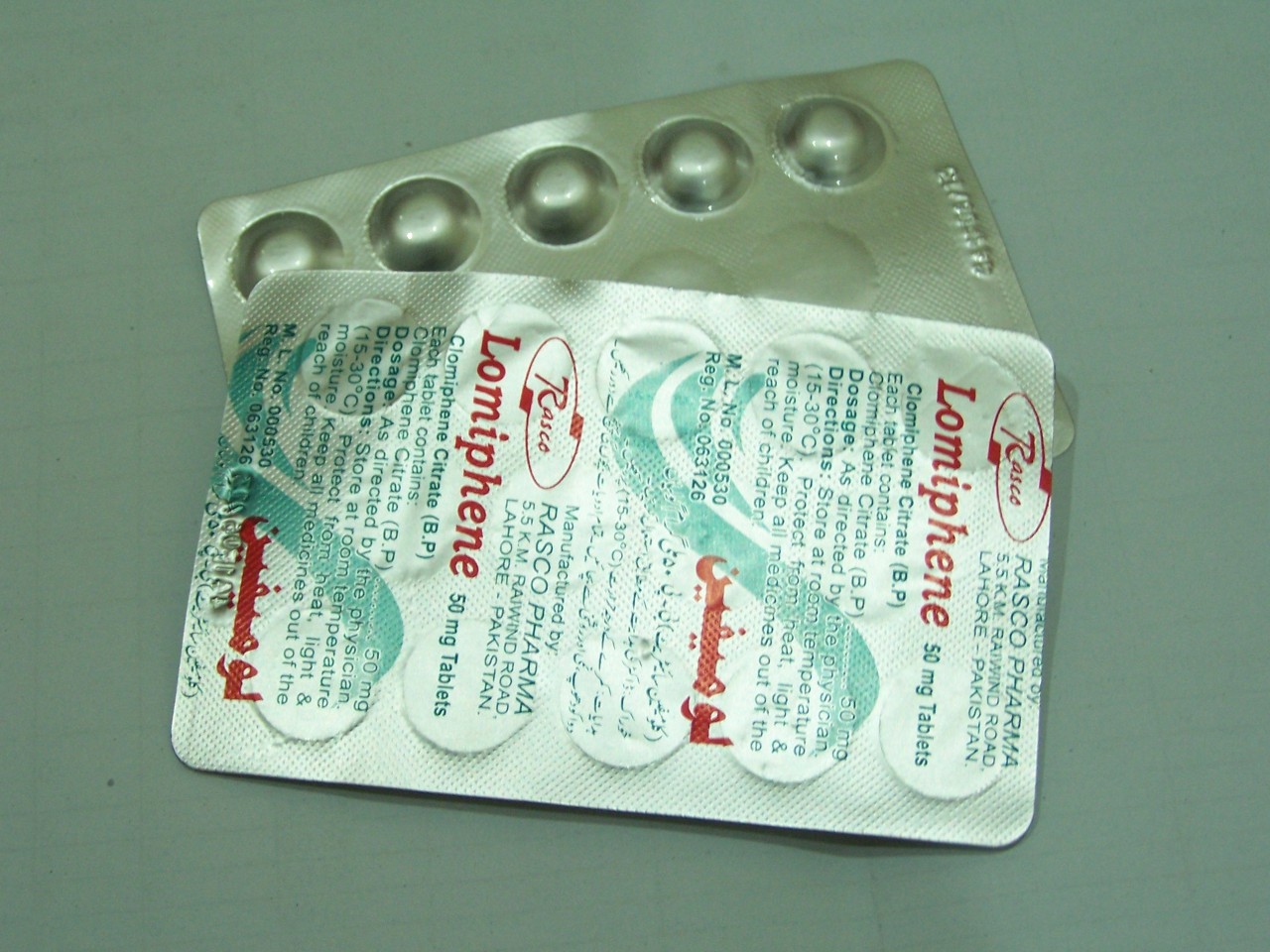
Lomiphene Clomiphene Citrate 50mg by Rasco Pharma


Product Description
Clomiphene citrate became clinically available in 1968 and remains the first choice for ovulation induction in most women because of its relative safety, effectiveness, and low cost. Clomiphene citrate is a weak estrogen, but its predominant role is probably that of an antiestrogen. Clomiphene stimulates increased serum concentrations of FSH (follicle stimulating hormone) and LH (lutienizing hormone). The increased levels of FSH and LH stimulate the growth of a follicle in the ovary leading to ovulation.
Clomiphene is used to stimulate ovulation, increase ovarian progesterone secretion during the second half of the cycle, and make menstrual cycle lengths more predictable. Clomiphene is taken orally once a day for 5 days.
Clomiphene is only active in the month it is taken. It also need not be taken in a cycle where pregnancy will not be possible because of separation, illness, or other circumstances.
Treatment
If you have no menstrual cycles:
In women with no menstrual cycle, the initial course of clomiphene citrate is started after a progestin (Provera) induced menses. If no menses occurs after taking Provera only 10% of the women will ovulate after clomiphene citrate. After 5 days of progestin, the woman begins clomiphene citrate on the fifth day of bleeding. One 50-mg tablet of clomiphene citrate is taken for 5 days. Intercourse should begin 3 to 5 days later in anticipation of ovulation.
If you menstruate:
In women with spontaneous menses clomiphene citrate may be started on days 3, 4, or 5 of menses. Ovulation will be delayed if clomiphene citrate is started later than day 5 of the cycle, and starting clomiphene citrate prior to day 5 may result in recruitment of additional follicles. Ovulation predictor kits detecting the LH surge may demonstrate false positive results if testing begins near the time of clomiphene citrate administration.
In the first clomiphene citrate cycle no further testing is performed.
After the first treatment
If menses occurs:
If menses occurs, the same dose of clomiphene citrate is given after a normal pelvic examination or pelvic sonogram.
In the second cycle, serum progesterone is checked in the second half of the cycle to evaluate ovulation.
If normal progesterone concentrations are found, the same clomiphene citrate dose is repeated in the third cycle. Ultrasound should be performed a day or two prior to ovulation to assess the uterine lining (endometrium).
If menses does not occur:
If bleeding does not occur or if progesterone concentrations are low, the dose of clomiphene citrate is increased in 50-mg increments per day until a dose of 150 - 200 mg per day is reached. Pelvic examinations or sonograms should be performed after each increased dose of clomiphene citrate. Clomiphene citrate can result in residual follicles or cysts persisting into the next menstrual cycle. If these cysts are present clomiphene citrate should not be taken until they have resolved. Once an ovulatory dose is established, the current regimen is maintained for 3-6 months. Further increase in the dose of clomiphene citrate will not be of benefit.
Side effects
- The most common side effect is flushing during the time of clomiphene citrate administration
- Ovulation pain - because the result of taking clomiphene is increased ovarian stimulation, it is not uncommon to notice increased ovarian sensitivity around the time of ovulation. Ultrasonography may be performed since abdominal pain may represent ovarian hyperstimulation.
- If visual complaints are present, clomiphene citrate may be discontinued.
- Other side effects include nausea, breast tenderness, headache, depression, mood changes, and vaginal dryness.
- In up to 50% of patients clomiphene, citrate will decrease cervical mucus production. This may make it impossible for the sperm to swim through the cervix into the uterus. Some physicians will try to treat this problem by having the patient take estrogen. Estrogen treatment is not very successful. The best treatment is to perform intrauterine inseminations to bypass the poor cervical mucus. Timing of the insemination is best accomplished using ovulation predictor kits. If the kits are unable to be used, ultrasound and an HCG injection can be used to prompt ovulation and time the insemination.
- Another common side effect of clomiphene citrate is poor development of the endometrium. If the endometrium is less than 7 mm in thickness, pregnancies are rare and other treatment options should be considered.
Response to treatment
Approximately 70% of patients treated with clomiphene citrate will ovulate and 40% will conceive. Seventy-five percent of women who will ovulate do so during the first 3 months of treatment. Failure to achieve pregnancy after six good clomiphene citrate cycles is reason to proceed to other methods of ovulation induction.
Multiple pregnancy
The incidence of twins is increased to 5-10%, but multiple births of more than twins are rare. If a multiple pregnancy would be a major problem and if embryo reduction is not an option, patients may consider doing ultrasound each cycle to count the number of follicles and skip cycles when too many follicles are present.
The rate of spontaneous abortion is not increased, nor is the incidence of congenital anomalies.
Variations in treatment
Alternative regimens and adjunctive therapies have been used with clomiphene citrate therapy. The duration of clomiphene citrate therapy may range from 3-7 days and the dose may be decreased to 12.5 mg/day in patients who hyperstimulate on the routine dose. Although clomiphene citrate can be used to treat poor progesterone production, clomiphene citrate therapy also may result in poor progesterone production. If this occurs, progesterone vaginal suppositories, 50 mg a day can be added to clomiphene citrate beginning 2 days after ovulation and continuing until menses.
The addition of human chorionic gonadotropins (hCG), 10,000 IU intramuscularly, to the clomiphene citrate regimen is appropriate in cycles where a follicle develops but does not ovulate. Since only 15% of patients ovulate at doses of 150 mg or higher, timed hCG injections may be used in patients who fail to ovulate at 100 mg/day. The use of ultrasound to detect a follicular diameter of at least 18 mm prior to HCG injection is recommended since premature injection of HCG can inhibit ovulation.



